Eddie Gaedel Society of Northern Colorado
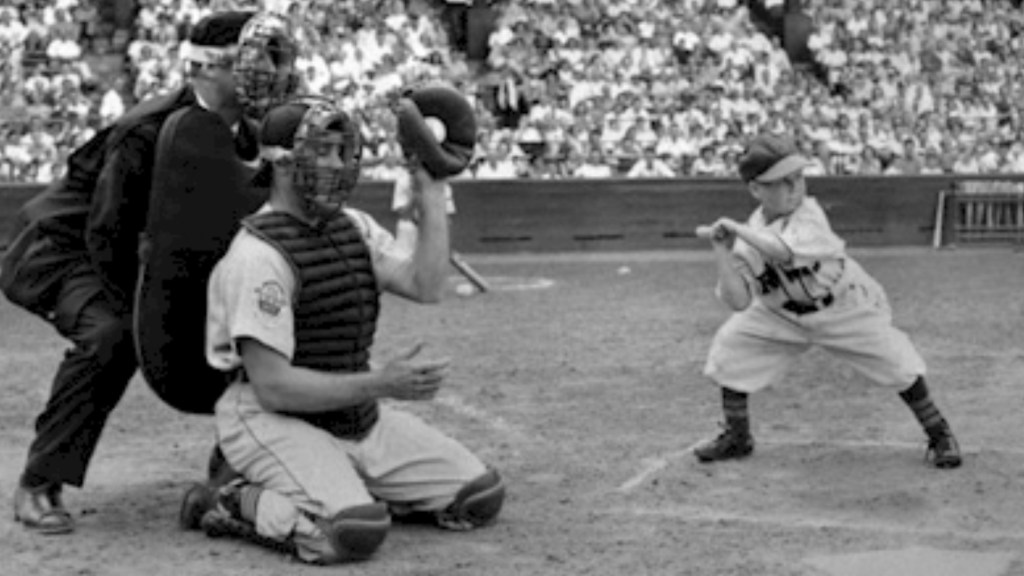
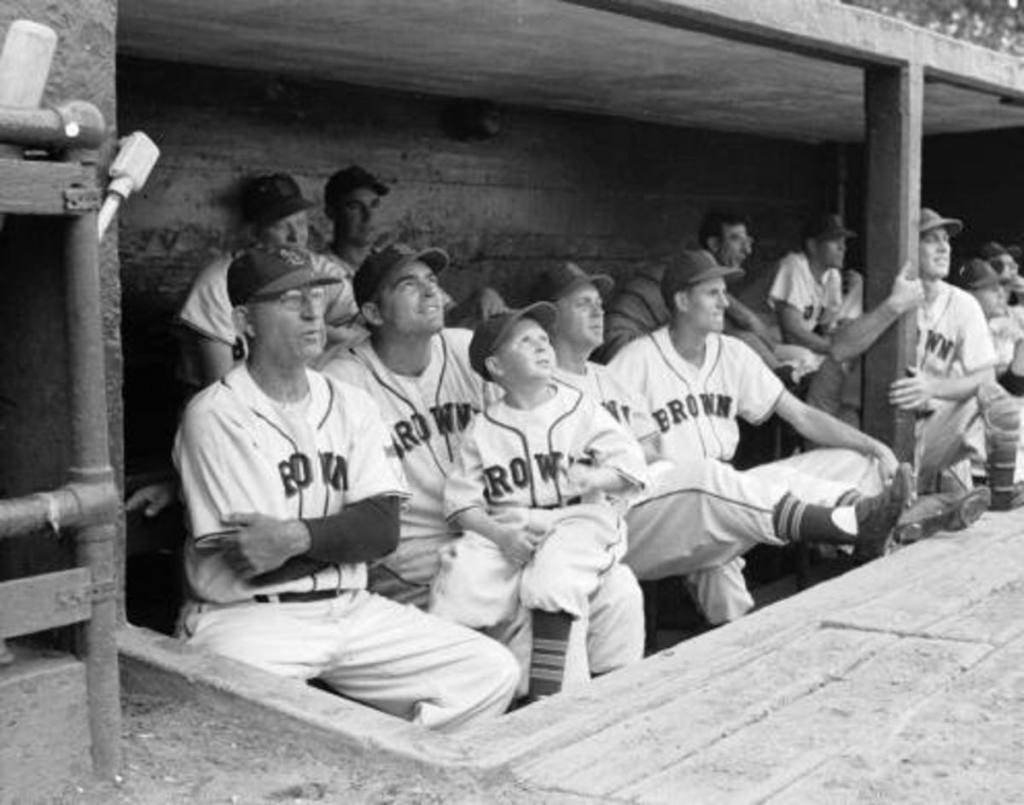
Eddie Gaedel, a vaudeville actor turned baseball player, made his only at bat in his career on August 19th, 1951. He managed to walk on four consecutive pitches before being replaced by a pinch runner. This at bat against the Detroit Tigers in Game 2 of a doubleheader has become the most talked-about at bat in the history of the St. Louis Browns baseball team.
The Eddie Gaedel Society of Northern Colorado is dedicated to honoring the brief but memorable career of the most famous Brownie of all time.
Eddie Gaedel Day
Each August 19th members of the Eddie Gaedel Society gather in bars, backyards or ball parks to hoist a beverage in remembrance of a truly great ball player.
Eddie’s Story
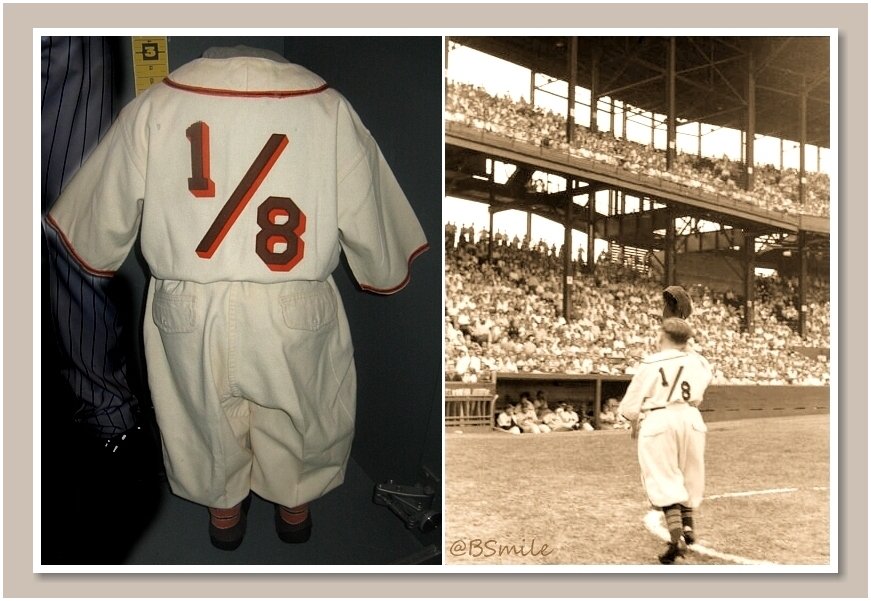
On Sunday, August 19th, 1951, Eddie Gaedel, a diminutive three-foot-seven pinch hitter, made a monumental impact in baseball history. His unexpected appearance at the plate for the St. Louis Browns left everyone, including the Detroit Tigers’ battery of Bob Cain and Bob Swift, in a state of astonished amusement.
How did this all come about? Well, Bill Veeck, the owner of the Browns, conceived the idea for this type of stunt prior to the war. He came across an article in the Saturday Evening Post in 1941, written by James Thurber, that inspired him. Veeck had always been seeking innovative ways to enhance the enjoyment, excitement, and attendance at the ballpark. As 1951 marked the 50th anniversary of the American League, Veeck decided to organize a grand celebration to commemorate this significant milestone.
To ensure that the American League would not be able to object to Eddie’s appearance, Veeck submitted the contract to the American League office late on the afternoon of August 17th, a Friday. Given that the game was scheduled for a Sunday, Veeck anticipated that the American League office would not review the contract until Monday at the earliest. This “timing” effectively rendered Gaedel’s contract legally binding, thereby making Eddie an active member of the Browns.
Prior to the second game of the Sunday doubleheader, Veeck unveiled a colossal seven-foot birthday cake. The cake was maneuvered around the field and, at home plate, emerged Eddie Gaedel. He waved to the spectators and subsequently retreated into the dugout, receiving an enthusiastic reception from the crowd.
The second game commenced, and the antics of Veeck and Gaedel appeared to have been forgotten. In the bottom of the first inning, Detroit Tigers pitcher Bob Cain took the mound and prepared for the game. The inning commenced with Frank Saucier positioned in the batter’s box, ready to begin the game. Subsequently, Browns’ manager Zack Taylor summoned a pinch-hitter – none other than Eddie Gaedel. As Gaedel ascended to the plate, umpire Ed Hurley turned around and exclaimed in surprise. Taylor presented Hurley Gaedel’s contract, and after a period of confusion and laughter, Hurley issued a call for a pitch. Gaedel, a right-handed hitter, was awarded a walk on four pitches and successfully reached first base. Jim Delsing subsequently replaced Gaedel as the pinch-runner. Gaedel acknowledged the crowd with a bow and departed the field to widespread applause, forever etching his name in infamy with an unparalleled on-base percentage of 1.000.
The aftermath of the incident had a profound impact on baseball. While some found it amusing, others were deeply affected. American League president Will Harridge promptly terminated Gaedel’s employment two days later, citing the “best interests of baseball.” Gaedel responded by feigning victimhood and blaming Harridge for the termination of his baseball aspirations. He also expressed his frustration that baseball lacked an appeal mechanism, given the recent departure of Happy Chandler from the position of commissioner. The following spring, seven diminutive individuals from Hollywood arrived at the Browns’ training camp, requesting a tryout. However, the new manager, Rogers Hornsby, was known for his stern demeanor and refused to allow them to participate.
In an attempt to capitalize on his identity, Eddie diligently pursued booking appearances and collected fees. However, despite his efforts, he consistently felt bullied because of his height. This relentless abuse eventually led him to develop a severe alcohol dependency. Tragically, his excessive drinking culminated in a violent altercation, resulting in his fatal beating.
Edward Carl Gaedel was born on June 8, 1925, in Chicago. He was the second of three children born to Carl and Helen Gaedel. Carl, originally from Lithuania, emigrated to the United States in 1902 and settled in Chicago. Helen, born in New York to Polish parents, contributed to the family’s financial well-being through employment as a shoe salesperson in a department store.
At the age of three, Eddie’s parents observed that he was experiencing slower growth compared to his peers. Although the underlying cause remained uncertain, it was evident that he was significantly shorter than his siblings. Eddie attained a maximum height of 43 inches, or 3 feet 7 inches, and maintained a weight of approximately 65 pounds throughout most of his life. In contrast, his parents and siblings exhibited normal stature.
Due to his height, Eddie endured persistent bullying and harassment throughout his childhood. This escalated as he matured, leading to frequent physical altercations. Despite the relentless abuse, Eddie persevered and graduated from high school. However, he grappled with persistent insecurity and anger stemming from his height and the negative treatment he received. Additionally, he exhibited a strong aversion to travel, citing fear and discomfort in unfamiliar environments.
Gaedel secured employment in diverse fields that recognized his exceptional qualities. He served as an errand boy for the local newspaper, the Drover’s Daily Journal, and participated in circuses, rodeos, and other entertainment performances. During World War II, Gaedel’s abilities led him to a riveting role, where he maneuvered into plane engines, wings, and other inaccessible areas due to his smaller stature.
Gaedel, renowned for his fame, earned a living through his appearances. He served as the Buster Brown shoe representative, attending store openings in Chicago and St. Louis. Additionally, he secured a position with the Ringling Brothers Circus and engaged in promotional work for Mercury Records. While lucrative opportunities presented themselves, such as extensive travel for Hollywood directors and California tours for Mercury Records Gaedel would choose to stay close to home.
Gaedel reappeared for Veeck on a few more occasions. On May 26, 1959, Gaedel and three other individuals with dwarfism descended in a helicopter at Comiskey Park. They emerged adorned as Martians and wielding ray guns. They sprinted to the dugout and apprehended diminutive middle infielders Nellie Fox and Luis Aparicio, transporting them to home plate for a ceremony. Two months prior to his demise, on April 19, 1961, Gaedel and seven other individuals with dwarfism engaged in the role of box seat vendors at Comiskey Park. Veeck employed them after receiving complaints regarding the height of his customary vendors, who obstructed the view of certain patrons.
Gaedel was combative, particularly after consuming alcohol, which became increasingly frequent. He engaged in numerous fights and altercations. One relative described him as having “beer muscles.” He resided at home with his impoverished mother and brother in an apartment on the Southside of Chicago. Gaedel remained close to his home and was known to be very fond of his mother. His health deteriorated due to high blood pressure and an enlarged heart, which was exacerbated by his drinking habits.
On June 18, 1961, Gaedel, who was unemployed at the time, became intoxicated at a bowling alley. As was his custom, he engaged in altercations with either other patrons or individuals he encountered en route home. A pursuer followed him home and inflicted physical abuse upon him. Gaedel’s mother discovered him lying in bed, deceased. He had sustained bruises on his knees and the left side of his face. An inquest concluded that he had suffered a heart attack, which was undoubtedly the result of the beating. He was only 36 years of age. The sole baseball player who attended his funeral was pitcher Bob Cain, who felt a sense of obligation. Gaedel was interred at Saint Mary Catholic Cemetery and Mausoleum in Cook County, Illinois.
 eddiegadelsocietynoco.com